Journalism. News. Sports. Fashion. Art. Film. Photography. Opinion.

Showing posts with label news. Show all posts

Friday, 29 January 2010

Terry Exposed As Ruling Overturned By High Court


picture courtesy of: http://www.flickr.com/photos/13833985@N02/

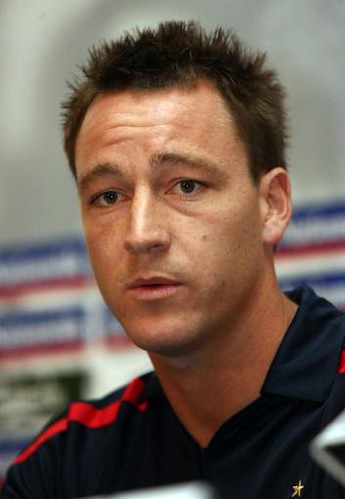
John Terry was today named as the sportsman who was behind a gagging injunction involving an alleged "affair" with another footballer's girlfriend.

Chelsea star Terry's legal representatives had originally applied and won a High Court injunction in a private hearing last Friday after learning that a Sunday tabloid, thought to have been the News of the World, had planned to publish a story regarding his private life.

The controversial gagging order, also known in legal circles as a 'superinjunction', stops newspaper groups from revealing who had applied to prevent the story leaking, publication of details of the story, and any photographs related to the story.

However, Mr Justice Tugendhat lifted the injunction, commenting that "the information was in "wide circulation amongst those involved in the sport in question, including agents and others, and not just amongst those directly engaged in the sport".

Unsurprisingly, the majority of Britain's media outlets and experts see this landmark case as a victory for free press, who feel that the issuing of court injunctions takes away the British public's right to know.

In contrast, golfer Tiger Woods' affairs have been extensively covered by American news and media outlets across the pond, with stories such as these given the freedom of publication by United States law. However, two weeks after the allegations were first made public, Woods won an injunction in the UK much like Terry's, preventing the British media from publishing new details on his personal life, prompting fears that foreign litigants can soon take advantage of repressive British laws.

In light of these recent revelations, Terry is now expected to suffer an enormous amount of backlash from supporters fearing that this latest scandal will wreck England's preparations for the World Cup, and national team manager Fabio Capello, who will face pressure to replace Terry as England's captain. And like Woods, Terry must also face the prospect of several sponsorship contracts being terminated in this latest blow to his scandal-ridden career.

Justice Tugendhat's overturned decision is bound to cause a profound effect for the future of journalism and Britain's much-criticised privacy laws. John Terry's alleged infidelity is national headline news, such is his status in England, and this can only be good news for media circles across the country, as the principles of free press gained a vital victory.

Monday, 16 November 2009

Obama Criticises Censorship in China

US President Barack Obama has called for 'universal rights and freedom' in his latest visit to China.

Speaking in front of an audience of 400 students at the Shanghai Science and Technology Museum and streamed live on the White House website, President Obama declared that freedom of expression, and worship, of access to information and political participation are "universal rights", saying that they "should be available to all people, including ethnic and religious minorities, whether they are in the United States, China or any nation".

Despite praising China's economic growth due to rapid industrialisation, calling it "unparalleled" in today's society, and insisting that the US is not looking to constrict China's rise as a world power, Obama's latest comments are sure to rile his hosts as he is set to meet Chinese President Hu Jintao in Beijing tomorrow to discuss matters such as climate change and nuclear programmes in Iran and North Korea.

In a country where media outlets and content on the internet are heavily censored, Obama's first visit to the People's Republic as President was a choreographed affair. The 400-strong student audience were carefully hand-picked by government officials, and two of the four students he called up on the platform were discovered to be members of the Communist Youth League, the university representatives of the party.

When asked for his opinion on the internet censorship program that is currently blocking websites such as Twitter known as the 'Great Firewall of China', Obama was also careful not to directly attack the Chinese government, declaring that he was a "firm believer in openness" and that criticism created through freedom of expression has helped him with certain decisions and also made him a better president.

Obama should know how much of a powerful tool the internet can be; after all, his 2008 Presidential campaign took advantage of YouTube and Twitter to gain support across the country. However, as he prepares to meet President Jintao for dinner in Beijing, his efforts to completely unify the United States and China have gained attention worldwide not because of the Presidential summit tomorrow, but for his indirect criticism of China's communist, authoritarian rule, something which has been under global scope for the best part of 20 years.

Saturday, 24 October 2009

An Early Christmas Gift for the BNP?

On Thursday, BBC's Question Time went ahead with the controversial decision to appoint the leader of the British National Party, Nick Griffin, as one of their guests. A decision which was sure to divide national opinion, a record eight million viewers watched the panel and the audience mercilessly attack Griffin and his policies with hostile questions and answers.

However, as Question Time is traditionally known for their discussions on a variety of subjects and debates, the show was a platform for the audience to jeer and shout verbal abuse at the BNP supremo, who handled the constant hostility and questions about his actions with an evasive nature. For about 85% of the programme's broadcast, the focus (inevitably) was on attacking Griffin and his party, a factor which he doubtless had expected and in some respects, probably hoped for.

Controversial and highly ignorant his beliefs may be, Griffin and the BNP are still a political party who should be given the airtime to express and state his policies just as much as the likes of the Labour and Conservative parties. Question Time has made a name for offering their guests the chance to express their views on television and as a medium for objective debates on a variety of topics. Thursday's edition was essentially a vitriolic hotbed for constant antagonism (albeit understandably) at the man who controversially stated that "if Winston Churchill was still alive, he would've been a member of the BNP", and because of this, Griffin has the chance to play the victim and attack the BBC, saying that he faced "a lynch mob" at the Beeb's headquarters and will lodge a complaint against the network about his treatment.

The aftermath of Griffin's appearance has sparked a rise in support for his far-right party, with a recent YouGov poll in the Daily Telegraph showing that 22% of the people questioned would consider voting for the BNP, and the party's claims that 3,000 people registered to join during and after the broadcast, supporting critics' fears that the BBC have given the BNP the massive publicity it wants.

I had supported the Beeb's decision to give Nick Griffin the chance to appear on television because I, like most of the nation, had wanted to see how he would handle himself amidst a cauldron of disdain and contempt at his beliefs and policies. However, I fear that Griffin and his supporters' cause has been greatly aided, and David Dimbleby aside, the BBC could and should have handled the whole situation better.

Monday, 19 October 2009

Berlusconi Judge 'Secretly Filmed'

In the latest in a long line of headline scandals, Silvio Berlusconi has come under heavy criticism from all sides after a television channel he owns secretly filmed a judge who has ruled against him in a bribery case.

Canale 5, part of the Italian PM's television company Mediaset, unveiled footage of judge Raimondo Mesiano taking a walk, smoking a cigarette, and visiting a barber shop.

The footage, which aired on Italian television on Thursday, includes a voiceover ridiculing the judge, calling his behaviour "eccentric" and poking fun at his turquoise socks. The voiceover also points out to him smoking his "umpteenth" cigarette and that he "can only relax at the barber's", calling him "impatient".

This comes after judge Mesiano's October 5 ruling to order Berlusconi's holding company, Fininvest, to pay €750m (£685m) to a rival company after finding Berlusconi "co-responsible" for bribing a judge who was in favour of a takeover deal.

Naturally, lawyers and civil rights groups were incensed at judge Mesiano's invasion of privacy, calling the secret footage "an unprecendented violation of privacy of a member of the judiciary", akin to George Orwell's Nineteen Eighty-Four, where the inhabitants were constantly under the watch of a Big Brother-like totalitarian government.

The self-proclaimed "world's most persecuted person" has suffered a string of bad publicity in the last few months, after reports of him enjoying the services of call girls and paparazzi pictures of nude women at his villa in Sardinia.

Tuesday, 13 October 2009

'New' Michael Jackson Song Written in 1983

Released four months after his death, Michael Jackson's comeback single premiered worldwide yesterday at midnight on his official website.

'This Is It', a mid-tempo ballad featuring The King of Pop's signature sounds and background vocals from his brothers, has receieved its fair share of praise (Chris Moyles described it as "old-school Jacko" on his show yesterday) and criticism, with one website calling it "second-rate MJ pastiche".

Now, details have emerged that 'This Is It' was penned way back in 1983 by Canadian crooner Paul Anka, who co-wrote the song with Jackson originally titled 'I Never Heard', after Anka had threatened legal action against the Jackson estate, claiming that MJ "stole" the original tapes from his studio back in the '80s.

After complaining about not having been credited, Jackson's estate moved quickly to acknowledge Anka's contribution and promised him 50% of the song's profits, making for one of Hollywood's quickest-ever resolutions.

Smooth lawyering me thinks. Or Paul Anka did the right thing and decided to make a quick buck or two.

That was the cynic in me talking. As usual.

The World's Youngest Headmaster - A Shining Example of Defeating Poverty

This made me smile yesterday.

At just 16 years of age, Babar Ali is in charge of teaching hundreds of students in his family's backyard, helping to run classes for poor children from his village in India.

Babar Ali, as you will gather by now, isn't your average teenager. Coming from Murshidabad, a small town in West Bengal, he starts his day early, helping his family with the household chores and, with the help of an auto rickshaw, then embarking on a six-mile journey to the Raj Govinda school as a student, eager to learn.

When his day at the Raj Govinda school is over, Babar Ali then heads off back to his home and, at four o'clock every afternoon, summons the children from his village to his house, beginning classes and sharing what he had learnt earlier in his school to his poverty-stricken 'students', giving them something to look forward to even in the harshest of conditions.

The school now has 800 students, all from poor families. And including Babar Ali, there are now 10 teachers at the school, who are also students at school or college, who give their time voluntarily, and funding from donations means that even books and food are free.

Babar Ali's work has not been ignored in the community, having been recognised already in the authorities. His unofficial school has helped increase literacy rates in the area, and he has won multiple awards for his work.

In an area where families cannot even afford to send their children to school, even when it is free (Babar Ali still has to pay for his uniform and transportation even though the Raj Govinda school is free), this is a remarkable tale of defeating poverty with the help of education. Many of the children who attend his school help their poor families with their chores and work throughout the day, not having the chance to recieve the proper education that we all can take for granted sometimes. Babar Ali's story is a brilliant example of change, and can help better the lives of hundreds of children who are hoping to achieve for the future.

BBC News has a link with a video showing students from Plymouth quizzing Babar Ali about coping with being a teenage headmaster and his future prospects here: http://news.bbc.co.uk/1/hi/world/8302225.stm